Before the Greeks
Second millennium BC. A settlement in the area appears in Hittite records as Apasa, capital of the kingdom of Arzawa. The name is very probably the ancestor of Ephesos. There was a cult of a mother goddess here before there was anything Greek about the place.
The Greek city
c. 1000 BC. Ionian settlers arrive. The founding legend gives them Androklos, son of the king of Athens, directed by an oracle to build where a fish and a boar showed him — a story carved on the Temple of Hadrian.
c. 560 BC. Croesus of Lydia takes the city and, unusually for a conqueror, contributes to the new Temple of Artemis.
546 BC. Persia takes Lydia, and Ephesus with it.
356 BC. The Artemision burns.
334 BC. Alexander arrives. The temple is being rebuilt.
c. 290 BC. Lysimachus, one of Alexander's successors, moves the whole city to the site you now walk. The old town would not drain and the harbour was already a problem; the population refused to move, so — the story goes — he blocked the sewers during a rainstorm until they changed their minds. He builds the walls you can still trace along the ridge.
Rome
133 BC. Attalus III of Pergamon leaves his kingdom to Rome in his will. Ephesus becomes Roman.
88 BC. The Ephesian Vespers: at the instigation of Mithridates VI of Pontus, the Greek cities of Asia massacre their resident Italians. Tens of thousands are killed.
84 BC. Sulla's reprisal. The Memmius Monument at the top of Curetes Street was put up by his grandson.
29 BC onwards. Ephesus becomes the seat of the Roman governor of Asia and the largest city on the Aegean coast. Most of what you see dates from the two centuries that follow.
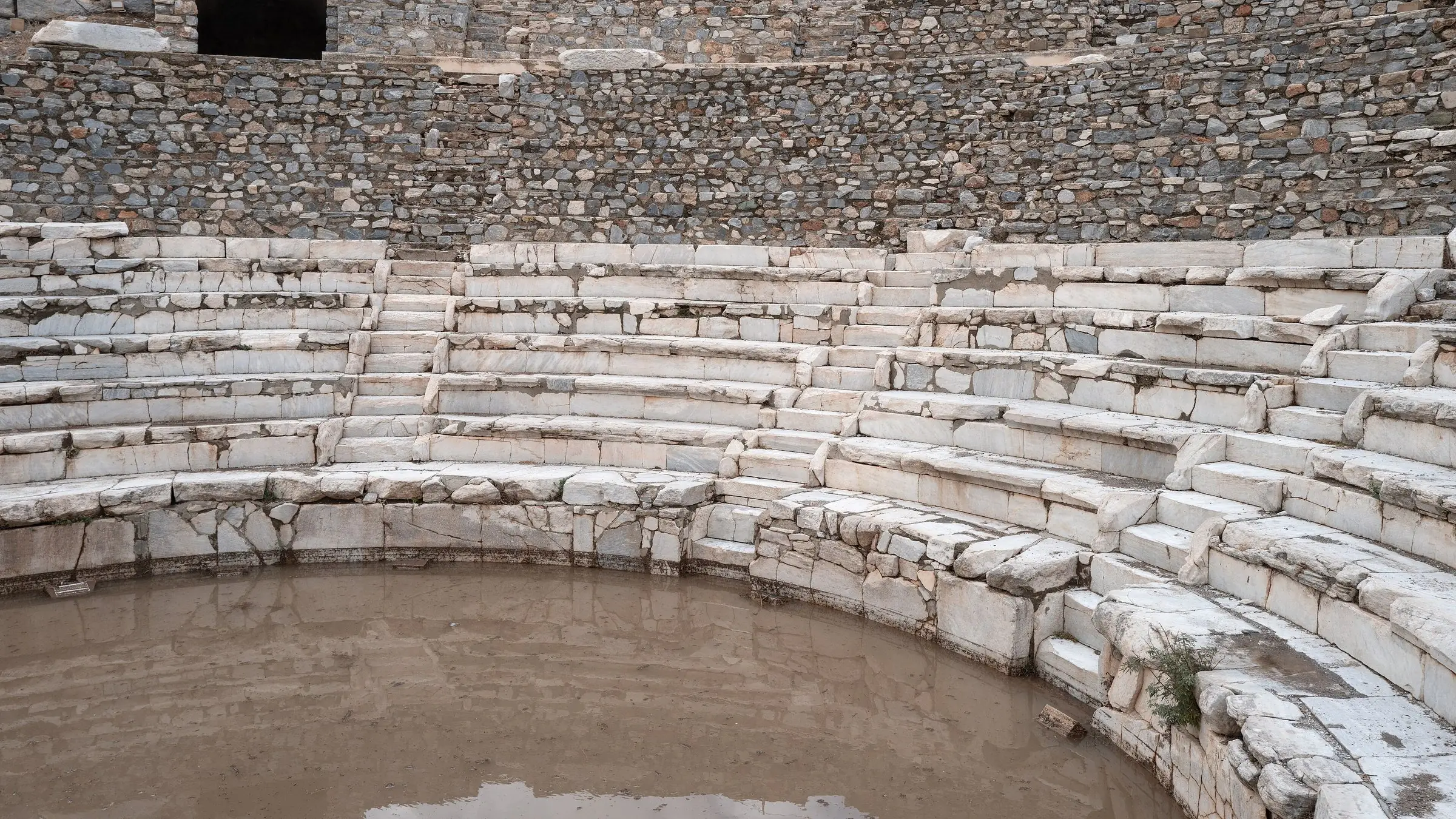
AD 52–55. Paul spends more than two years in Ephesus. The riot of the silversmiths, described in Acts 19, takes place in the Great Theatre.
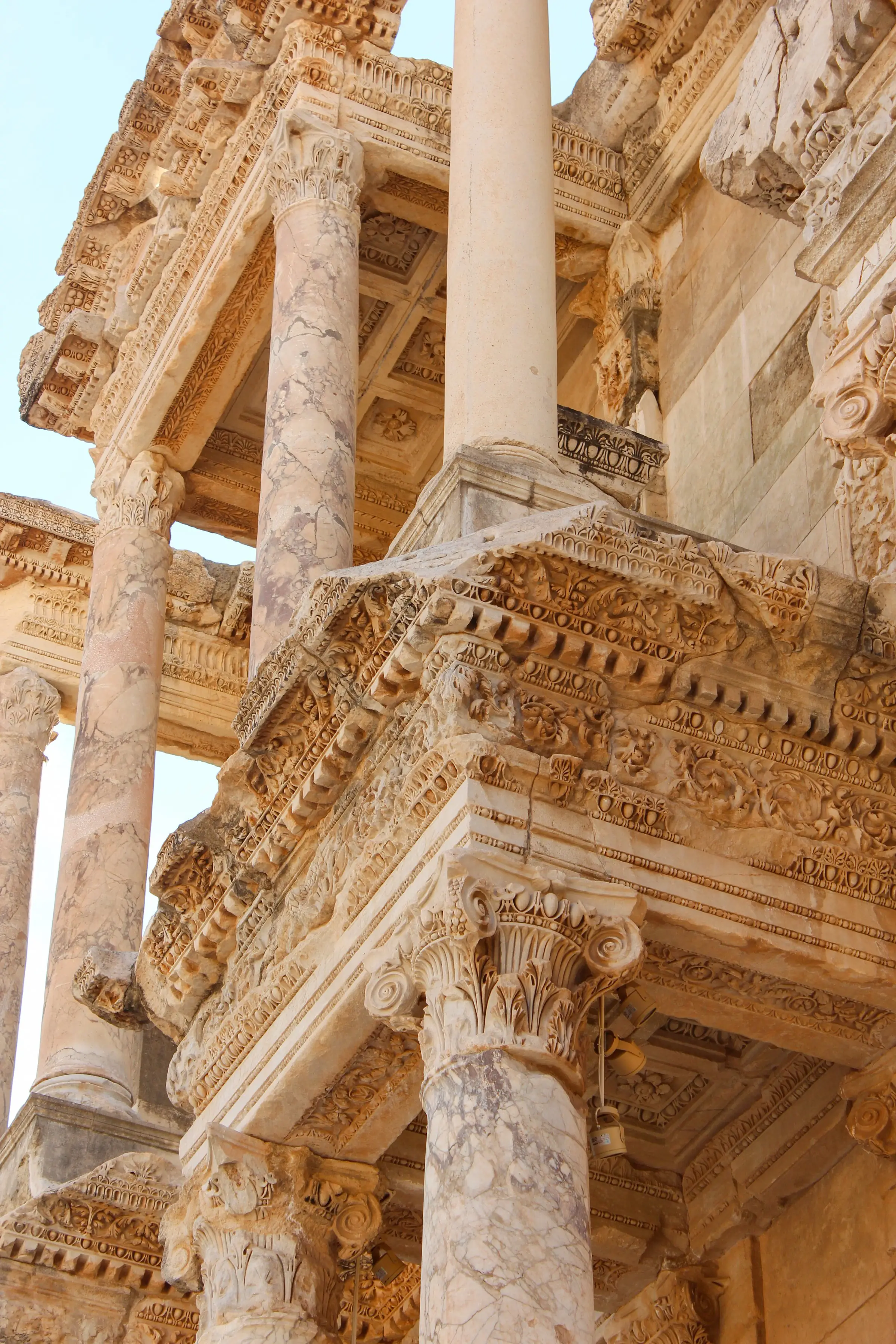
c. AD 117. The Library of Celsus is completed.
AD 262. A Gothic raid destroys the Artemision and burns much of the city.
Christian Ephesus
AD 431. The Council of Ephesus meets in the Church of Mary, near the harbour, and declares Mary Theotokos — God-bearer. It is one of the decisive moments in the history of Christian doctrine, and it happened in a building you walk past on the way to the Lower Gate.
c. AD 400. Harbour Street is rebuilt on a grand scale and lit at night. The city is still spending.
Sixth century. Justinian builds the Basilica of St John on Ayasuluk hill, over the traditional burial place of the apostle.
The long ending
Seventh century. Plague, earthquake and a failing harbour. The population begins moving to the hill.
654–716. Arab raids on the coast.
Eighth to eleventh centuries. The settlement is now on Ayasuluk. The classical city is a quarry.
1304. The Aydınoğulları take the town, which becomes Ayasuluk, briefly a prosperous Turkish port on a harbour that is itself silting.
1375. The İsa Bey Mosque is built below the fortress.
Fifteenth century. The Ottomans absorb the region. The old city is empty.
Rediscovery
1863–1874. John Turtle Wood digs for the British Museum, finds the Artemision in 1869.
1895 onwards. The Austrian Archaeological Institute begins systematic excavation, and has worked at Ephesus, with interruptions, ever since.
1970–1978. The façade of the Library of Celsus is rebuilt from its own fallen blocks.
2015. Ephesus is inscribed on the UNESCO World Heritage List.
2023. The Ephesus Experience Museum opens inside the site.
How old is Ephesus?
There was a settlement in the area in the second millennium BC, known to the Hittites as Apasa. The Greek city dates from around 1000 BC and the city you walk through was laid out around 290 BC.
When was Ephesus at its height?
The first and second centuries AD, as the Roman capital of the province of Asia. Most of the standing buildings date from then.