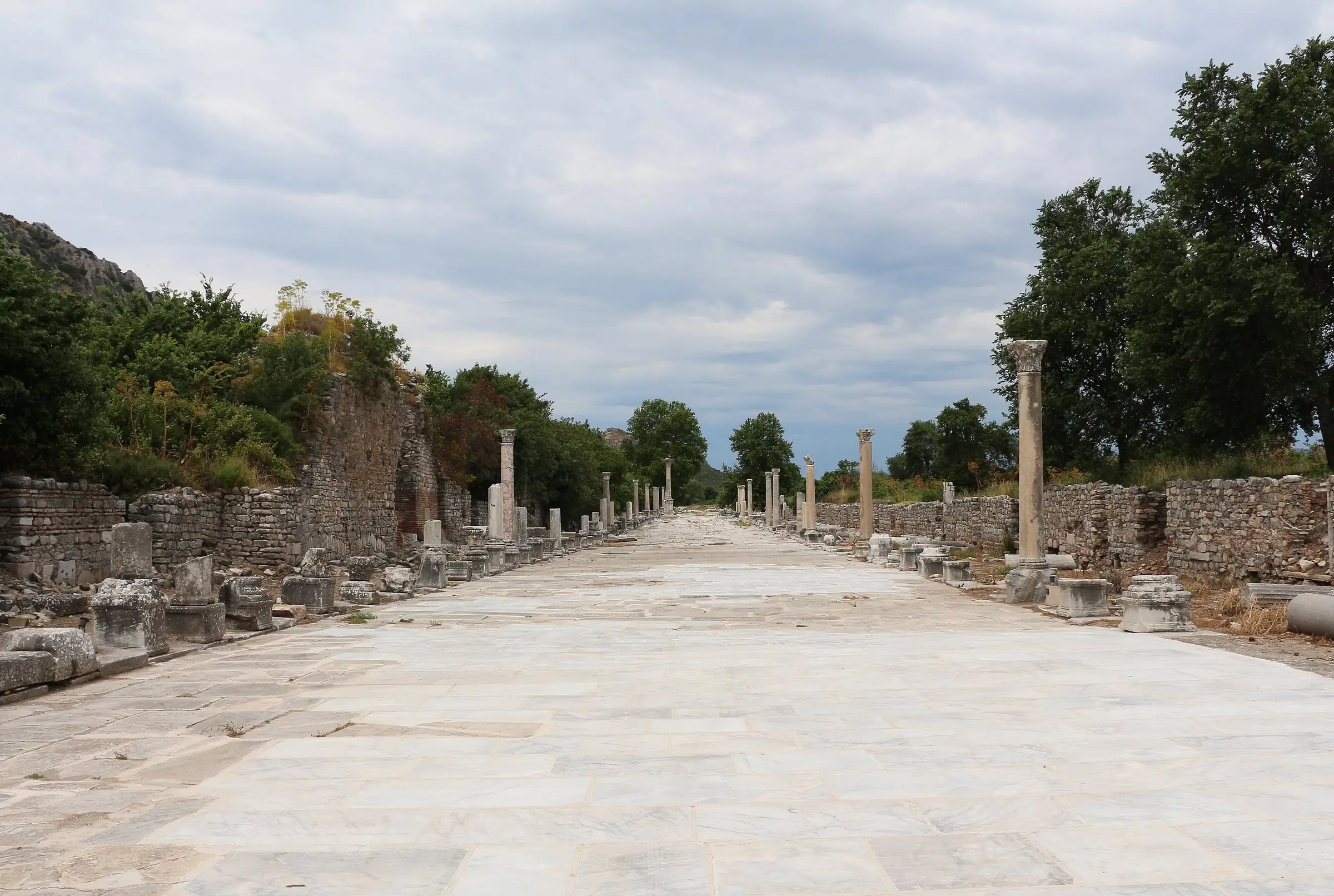
From the foot of the theatre the road runs straight west for half a kilometre, eleven metres wide, with colonnaded walkways on both sides and shops behind them. It ends in a flat field.
The last grand gesture
The street is named after Arcadius, the eastern emperor under whom it was rebuilt around AD 400 — which is to say that Ephesus was still spending serious money on public magnificence at a point when most people imagine the classical world had finished.
An inscription records that it was lit at night by fifty lamps hung between the columns. Very few cities in the Roman world had street lighting; the sources name Rome, Antioch and Ephesus.
Where the sea was
Walk to the western end and look at the plain. That is the harbour basin. Ships came up a channel from the Aegean, docked here, and unloaded onto this street; a visitor arriving by sea walked off a ship, up the colonnade, and straight into a theatre seating 25,000. It was designed to make an impression on people who had just got off a boat.
The Cayster — the Küçük Menderes — brought down silt faster than it could be dredged. The harbour retreated, was re-dug, retreated again. The sea is now about five kilometres west.
The end of the walk
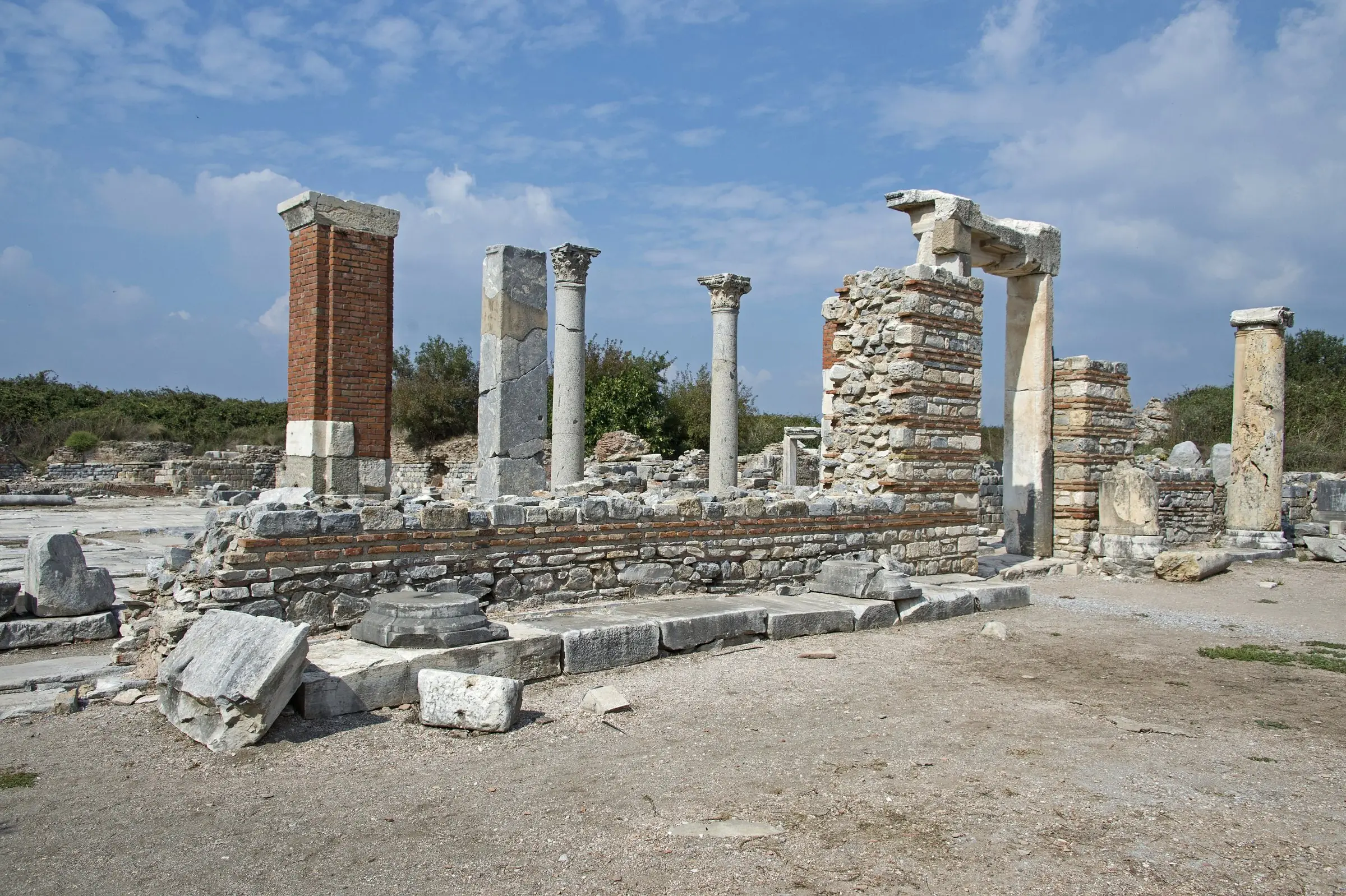
Beyond the street the path bends south past the Church of Mary, where the Council of Ephesus met in AD 431 and declared Mary Theotokos, and the Harbour Baths, and then out through the Lower Gate into the car park.
If you started at the top you have now walked the length of a Roman city, downhill, in about an hour of moving time. If you started at the bottom, this was your first impression and the library is still ahead of you — which is the argument for the other gate.