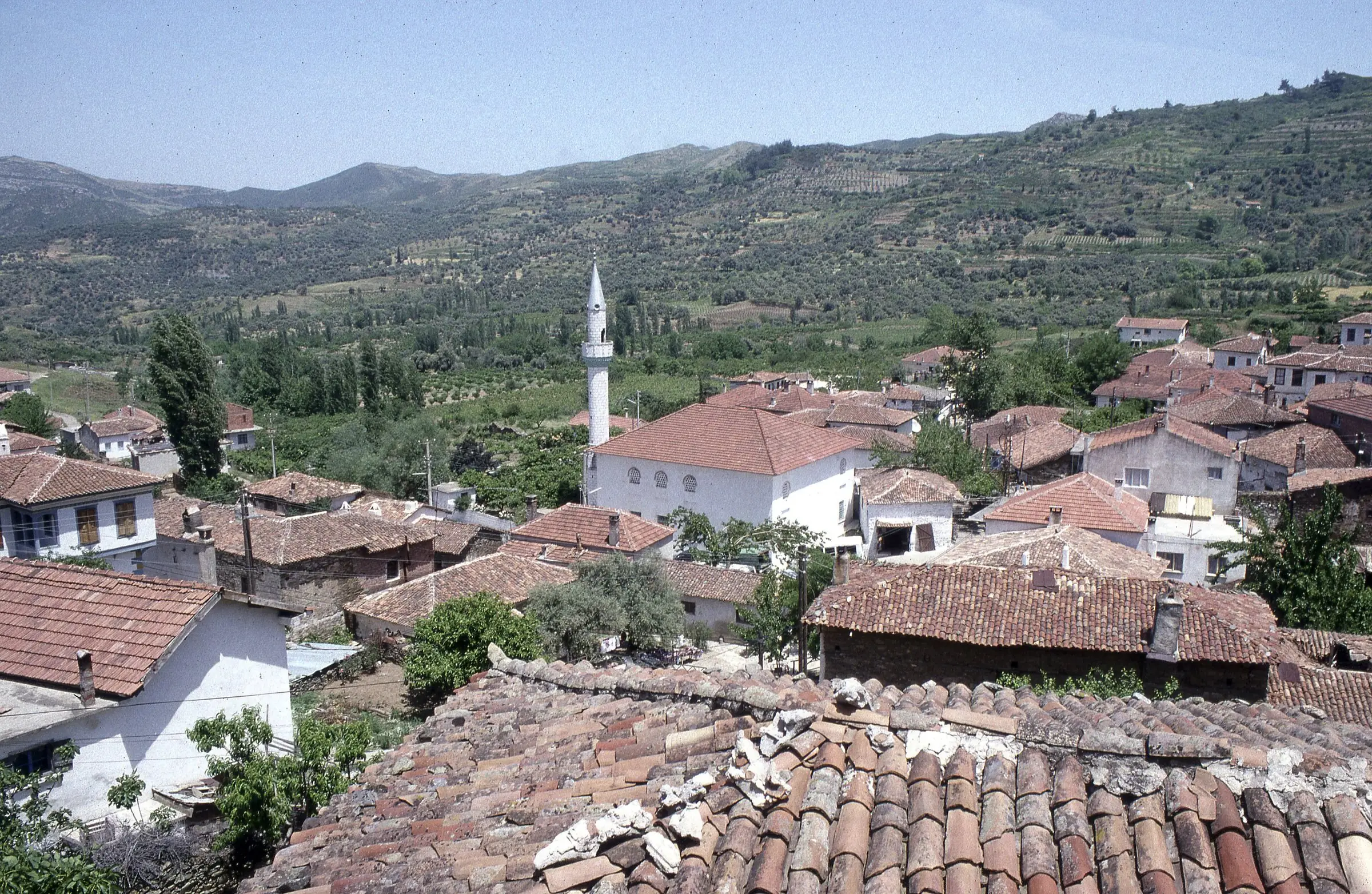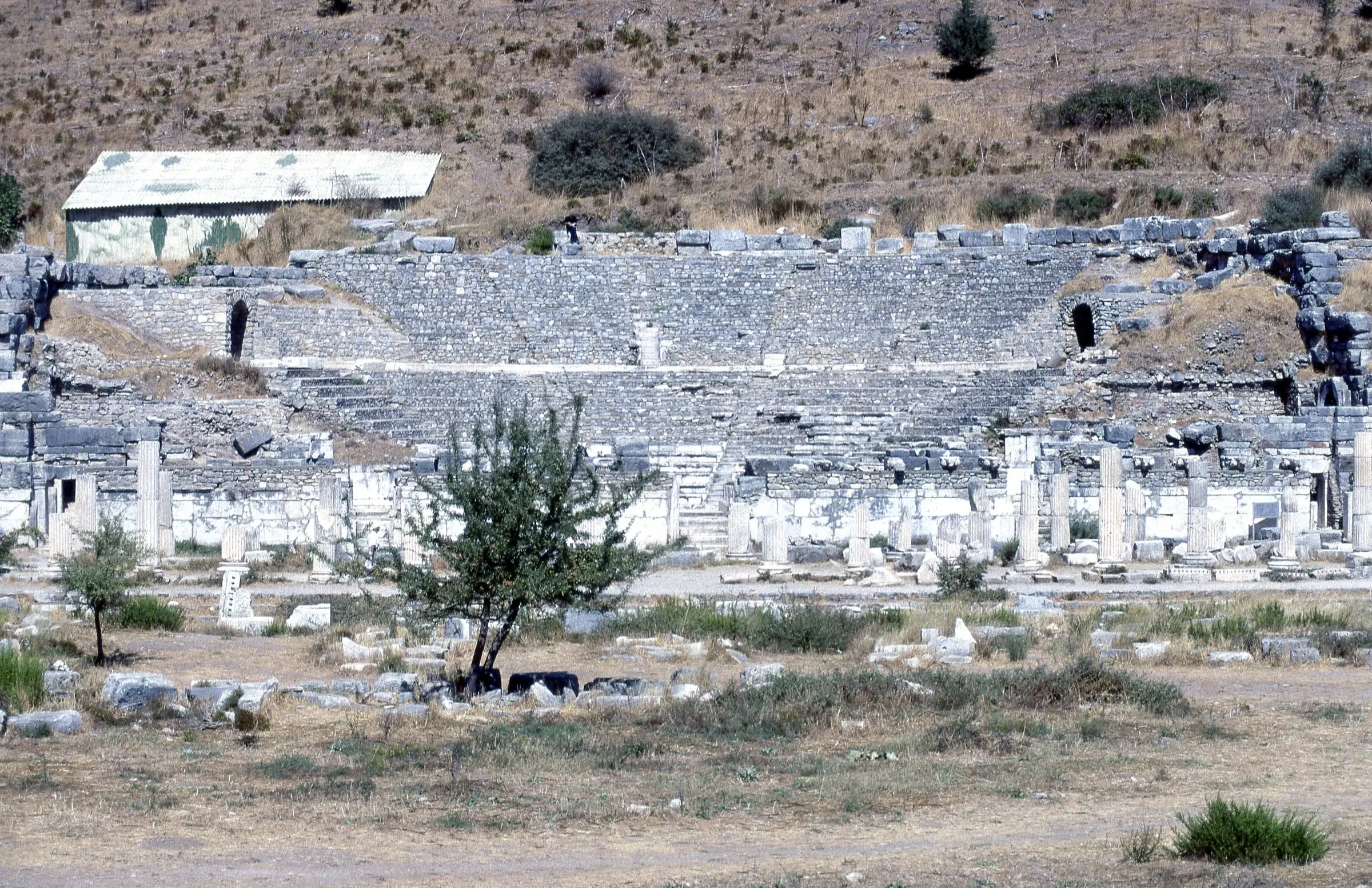
When the harbour failed and Ephesus began climbing the hill, this is where it climbed to.
What it was
Ephesus held that the apostle John spent his last years in the city and was buried on this hill. A small memorial church stood over the grave from the fourth century; in the sixth, Justinian replaced it with something enormous — a cross-shaped basilica with six domes, one of the largest churches of its age.
The tomb is marked in the floor at the crossing, and it is the reason for everything around it. Pilgrims came here in numbers for six hundred years.
What survives
More than you expect. The plan is legible at full size, a good number of columns are standing, the baptistery is intact enough to walk into, and the treasury and the courtyard are clear. It was partially reconstructed in the twentieth century, marked where the work is modern.
The hill also carries the Ayasuluk fortress above and the İsa Bey Mosque below, and from the terrace you look straight down onto the Temple of Artemis and out across the plain towards Ephesus.
Practical
- €6 for foreign visitors, covered by the Museum Pass
- in Selçuk, a ten-minute walk uphill from the otogar
- allow forty-five minutes
- exposed and hot in the afternoon, and the ground is uneven
Worth it?
With half a day in Selçuk, yes. It finishes the story that the end of Ephesus starts: this is the town the city became.