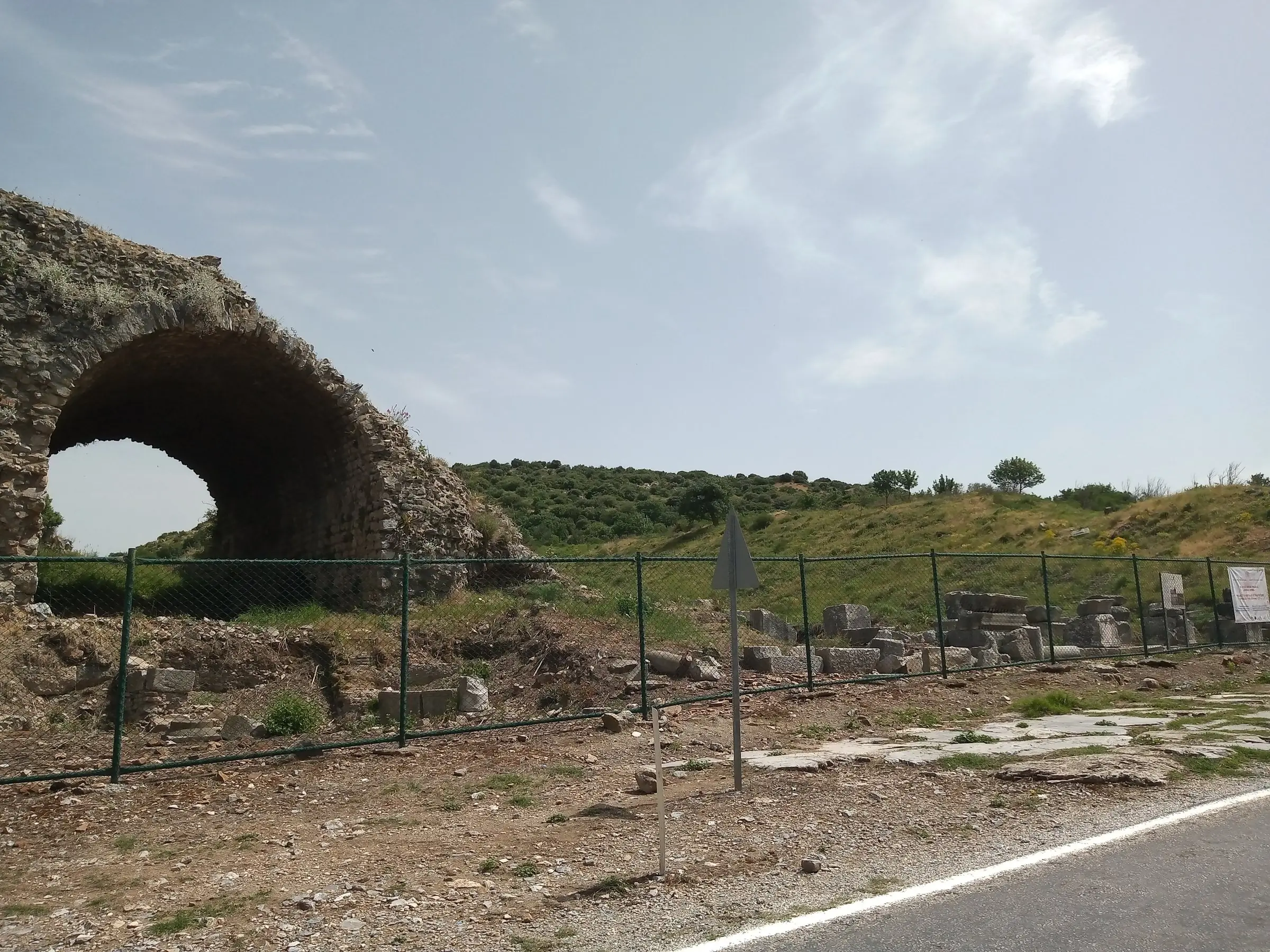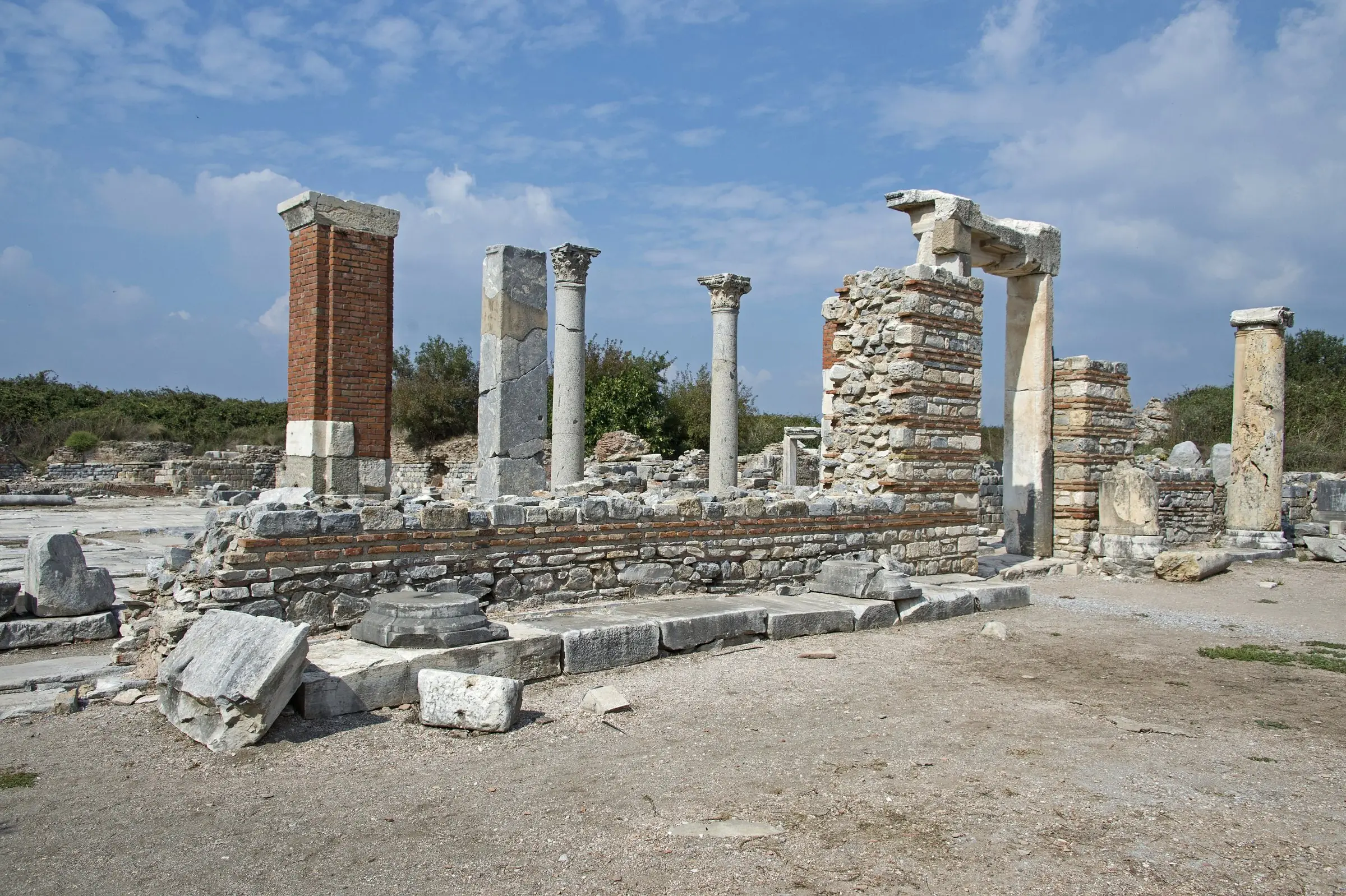
Walk out of Harbour Street towards the Lower Gate and there is a long, low ruin on the right behind a wire fence — columns, apses, a baptistery, a lot of brick. Most people photograph it from the path without stopping, if they notice it at all.
It is arguably the most historically consequential building at Ephesus.
What happened here
In AD 431 the emperor Theodosius II called a council of the church to settle an argument between Cyril of Alexandria and Nestorius of Constantinople. The question sounds technical and was not: was Mary the mother of Christ the man, or the mother of God?
The council met in this building and came down for Theotokos — God-bearer. Nestorius was condemned and deposed. The decision shaped Christian doctrine and devotion for the next sixteen centuries, and the churches that would not accept it went their own way; the Church of the East traces its separation to that summer.
Eighteen years later a second council met at Ephesus, this one so violently managed that Pope Leo called it a latrocinium — a gang of robbers. It was annulled two years later at Chalcedon.
Why a church was here
The building started as something else. It was a Roman public hall — a long colonnaded structure beside the harbour, probably commercial or civic — and in the fourth century it was converted into a basilica. The church then went through several rebuildings, so the plan on the ground is a palimpsest: apses inside apses, a domed church built inside the older nave, a baptistery with a sunken font you can walk down into.
That the city put its cathedral here, by the water, says what Ephesus still was in the fourth century: a port.
What to look for
- The baptistery, a round building on the north side, with the steps into the font intact. Adults were baptised by walking down into it.
- The apse at the eastern end, and the second, smaller church built inside the nave later.
- The length. Pace it. The original hall ran to something like 260 metres.
Getting to it
It is inside the archaeological site, between Harbour Street and the Lower Gate, signposted as Meryem Kilisesi. Fenced, with a path around and through it. Five minutes, and it will change what you think the last centuries of Ephesus were like.
What was decided at the Council of Ephesus in 431?
That Mary should be called Theotokos, God-bearer, rather than only the mother of Christ the man. Nestorius, who argued the other way, was condemned and deposed.
Can you visit the Church of Mary at Ephesus?
Yes. It is inside the archaeological site between Harbour Street and the Lower Gate, signposted as Meryem Kilisesi, with a path through the ruins. Five minutes.