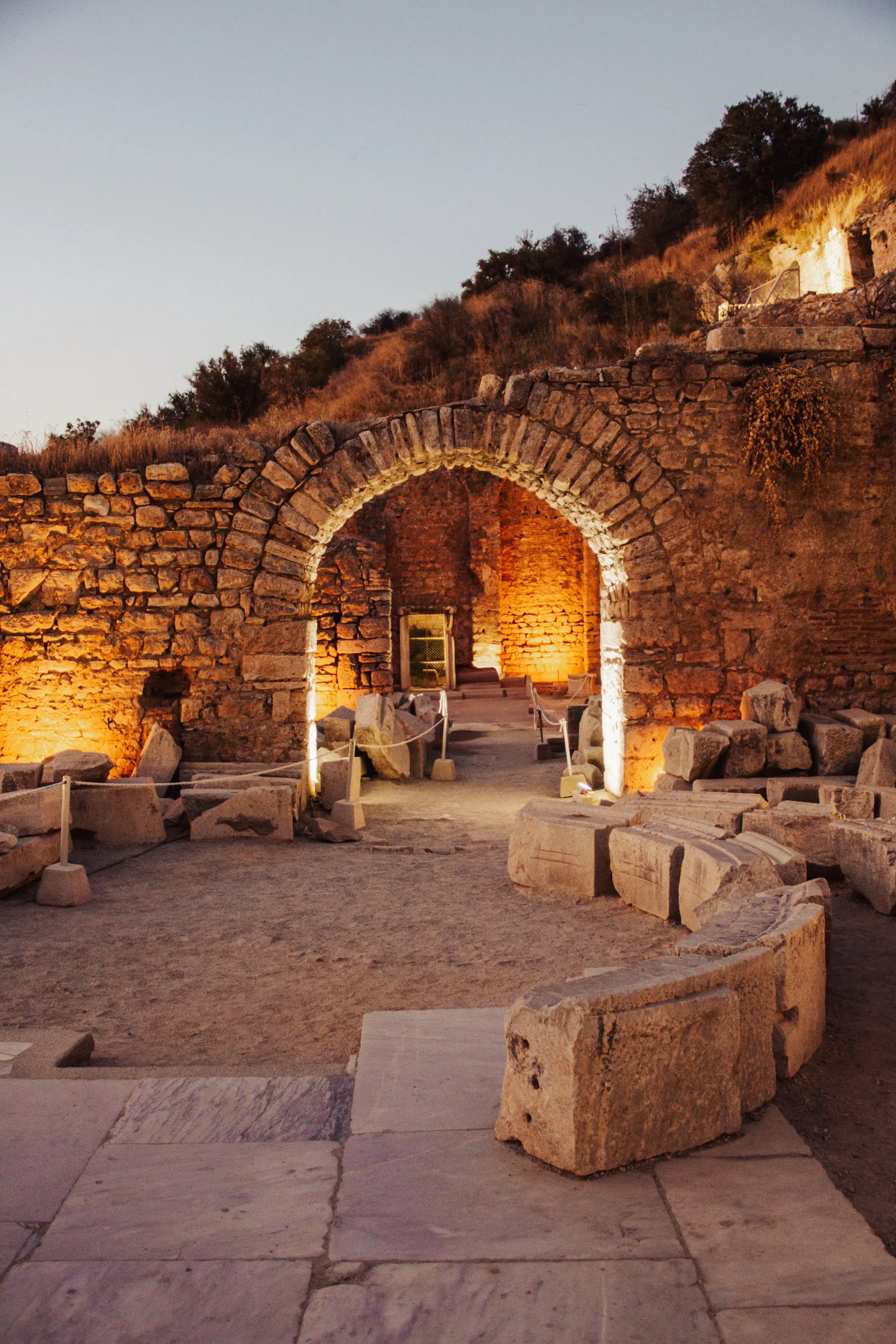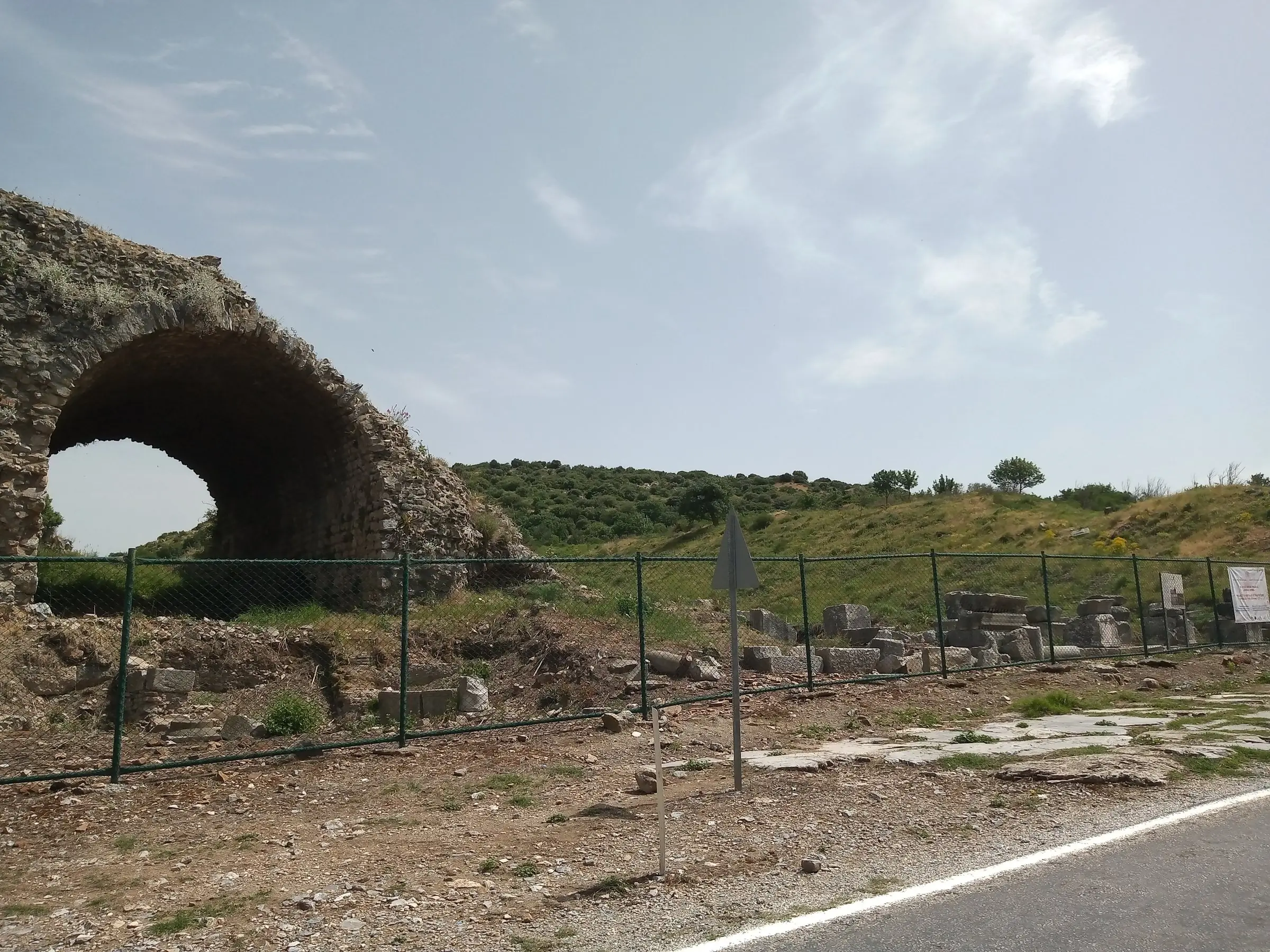
It is the first ancient thing you pass coming in at the Lower Gate and it looks like a long grassy dip with a wall along one side. Nobody stops.
What it was
A stadium in the athletic sense: a running track with banked seating, about 230 metres long. The Greeks laid it out on the north slope of Mount Pion, using the hillside for the seating on one side and building up the other on vaults.
Under Nero, in the middle of the first century AD, it was rebuilt on a Roman scale, and later altered again for the entertainments a Roman provincial capital was expected to provide — gladiators and animal shows. The eastern end was closed off into an arena for them.
Why there is so little of it
Because it was the nearest quarry. When Justinian built the Basilica of St John on Ayasuluk hill in the sixth century, and when the Byzantine walls went up, the stadium's cut blocks were the obvious material and they were three hundred metres away.
What is left is the shape in the ground, the vaulted substructure along the northern side, and the arched entrance you can see from the road.
What to do with it
Ninety seconds and a look at the length of it. It is the clearest illustration on the site of something worth knowing: Ephesus was not preserved and then excavated. It was picked over for a thousand years, and what survived largely survived because it was buried or because nobody could be bothered to move it.
Coming in at the Lower Gate, the stadium is on your right before the ticket office. Going out that way, it is the last thing you see.
The martyrdom story
You may be told the stadium is where the Christians of Ephesus were thrown to lions. There is no evidence for it here specifically, and the tradition attaches itself to almost every Roman arena in Anatolia. The gladiator cemetery excavated nearby is real, and the injuries on those bones are in the museum in Selçuk.
Can you go inside the stadium at Ephesus?
You walk past it rather than into it. It sits just inside the Lower Gate and what survives is the shape of the track, the vaults along the north side and the arched entrance.
Were Christians killed in the stadium at Ephesus?
There is no evidence for it here specifically. The tradition attaches to most Roman arenas in Anatolia. The gladiator cemetery found nearby is real and its finds are in the museum in Selçuk.